
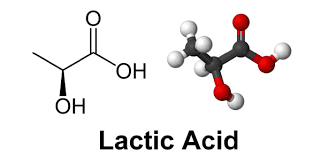
There are a lot of misconceptions around lactic acid/ lactate being the cause of fatigue when exercising. When it actual fact lactate is required to use within the bodies energy systems. Because of the negative factors that are associated with lactic acid it was overlooked that it could have any metabolic use and was considered as just a waste product of glycolysis. Glycolysis is the breakdown of glucose that releases energy and pyruvate. Pyruvate is then used to make more energy in other metabolic pathways. If there is oxygen involved within these pathways (aerobic exercise) then the pyruvate can be used within the Kreb cycle to make more energy. However if there is no oxygen (anaerobic) present then some of the pyruvate is then converted into lactate. Pyruvate is converted into lactate as if there is too much it can inhibit the body to make more energy. (Chandel, 2021, Facey, et al. 2013)
Why is lactate associated with fatigue?
There is an association between fatigue and lactic acid levels due to the fact that as intensity increases so does the volume of lactate within the body. This creates a simple and clear narrative to a lot of people that it must be lactates fault that the muscles fatigue. However, this is not the case. There have been studies that show when a muscle has been exposed to fatigue, lactate itself does not considerably influence force production. This means that even though lactate levels are high the muscle is still able to forcefully contract. So although yes lactate levels increase as you become fatigued there has been seen to be other contributing factors that could cause fatigue. A decrease of ATP, increase of inorganic phosphate, increase of ADP and a depletion of phosphocreatine have all been shown to have a relationship with a decline in force production. (Cairns., 2006)
Lactate is beneficial
Lactate is not as bad as it seems. It is actually required by the body and has it’s benefits. Without the production of lactate from pyruvate you would not be able to exercise for any longer than 10 to 15 seconds. There is lots of evidence that now supports the theory that lactate can be used as a fuel source to make energy when oxygen is present. When there is an increase in the availability of lactate, during intense exercise the body can use this as an alternative fuel. As exercise increases the cardiac muscles within the heart actually prefer lactate as a fuel source. Not only the cardiac muscles but also the skeletal muscles can use lactate when oxygen is present to keep up with the energy demands of the body. (Facey, et al. 2013)


